
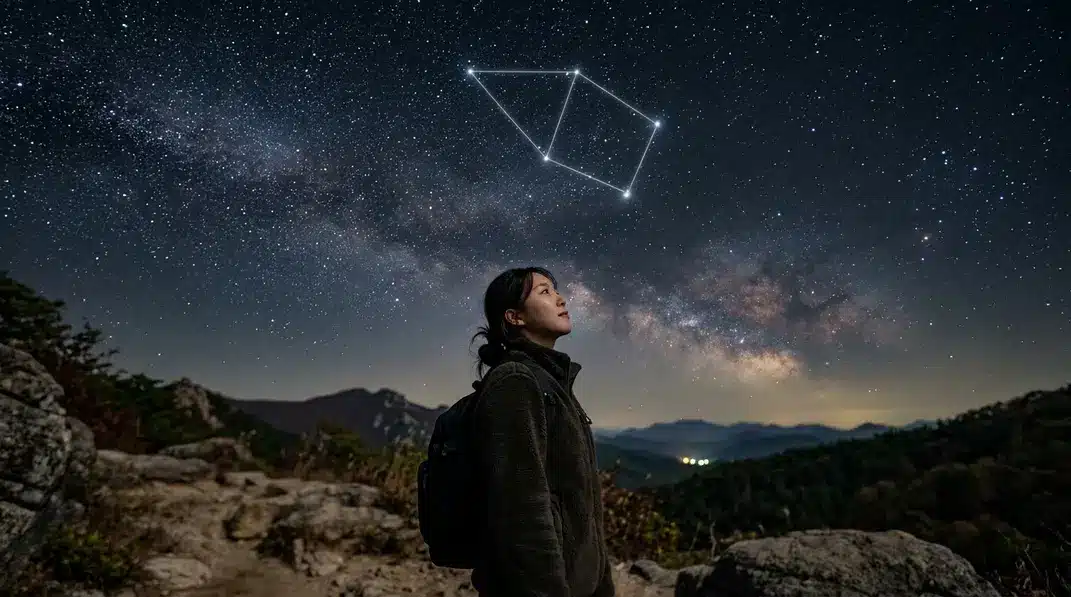

Have you ever typed something into a search engine so fast that auto-correct took you on an unexpected journey? I recently stumbled upon the search term “Cell pheus.” To be honest, it sounded like a cutting-edge biological concept at first! But as it turns out, it’s a common and quirky typo for one of the most fascinating features of our night sky: the Cepheus constellation. 😊
Whether you’re an amateur astronomer or just someone who loves a good mythological tale under the stars, you’re in the right place. Today, we’re going to bridge that funny little typo and dive deep into the real cosmic king, Cepheus. Let’s look up together!
Who is Cepheus? The Myth Behind the Stars 👑
In Greek mythology, Cepheus was the proud King of Aethiopia, husband to the beautiful (but boastful) Queen Cassiopeia, and father to Andromeda. If you’ve ever seen Clash of the Titans, you might remember his family’s dramatic encounter with the sea monster Cetus!
In the night sky, Cepheus is a circumpolar constellation in the northern hemisphere. This means that if you live in the northern latitudes, he never sets below the horizon! He looks a bit like a child’s drawing of a house with a steep roof, standing right next to his wife’s famous “W” shaped constellation.
Because Cepheus is circumpolar, the best way to find it is to first locate Cassiopeia (the “W”). The “house” of Cepheus is directly adjacent to it, rotating around the North Star, Polaris!
The Cosmic Treasures of Cepheus 🌟
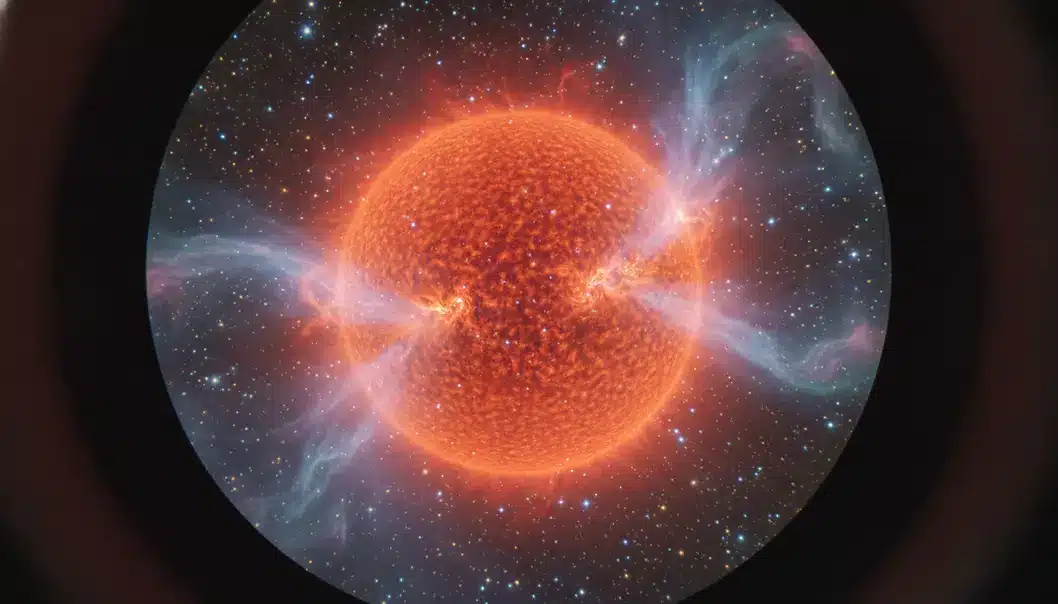
While it might not be the brightest constellation, Cepheus holds some of the most breathtaking objects in the universe. I remember the first time I pointed my telescope toward its “roof”—it was totally mind-blowing. Let’s break down some of its notable features.
| Star / Object | Description | Fun Fact |
|---|---|---|
| Alderamin (Alpha Cephei) | The brightest star in the constellation. | It rotates incredibly fast, completing a spin in just 12 hours! |
| Mu Cephei | A red supergiant star. | Known as Herschel’s Garnet Star due to its deep red color. |
| NGC 6946 | An intermediate spiral galaxy. | Nicknamed the “Fireworks Galaxy” because of its frequent supernovae. |
Many of the deep-sky objects in Cepheus, like the Fireworks Galaxy, are faint. You will absolutely need a dark sky away from city lights and a decent telescope to view them clearly!
Are You Ready to Spot Cepheus? 🧮
To figure out if you’ll have a good viewing experience tonight, I’ve put together a fun little Stargazing Visibility Score calculator. Give it a try before you pack up your gear!
🔢 Visibility Score Calculator
📝 Summary: The King Awaits
What started as a curious search for “Cell pheus” has led us to the majestic king of the night sky. Let’s quickly recap what we’ve discovered today!
Cepheus at a Glance
FAQ ❓
I hope you enjoyed this little astronomical adventure from a simple typo! Next time you’re outside on a clear night, try looking for the king’s house in the north. If you have any questions or stargazing stories, drop them in the comments below! Keep looking up! 😊