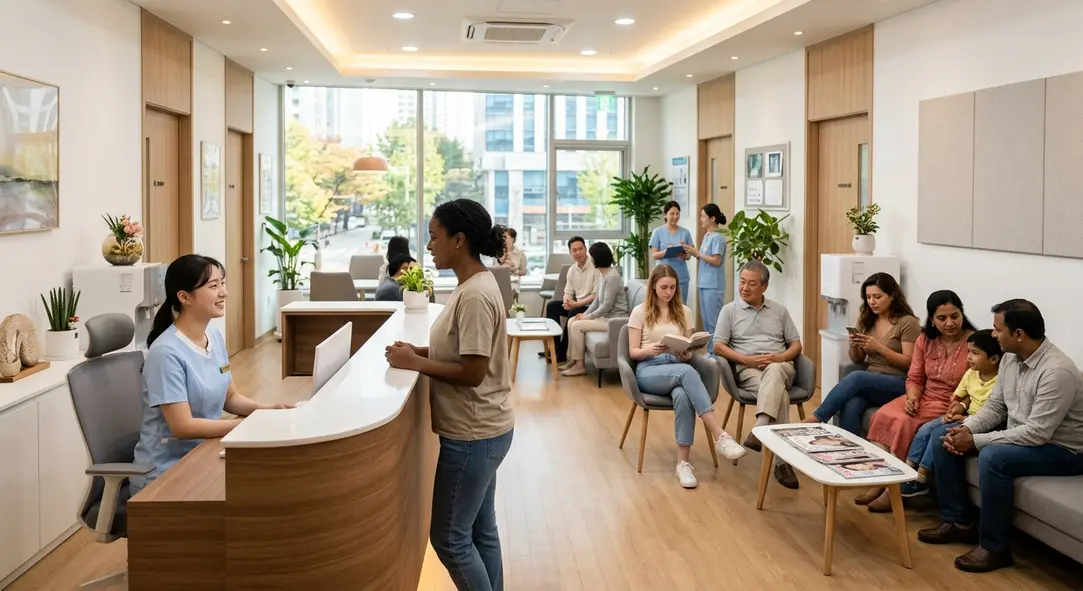

Getting sick in a foreign country is, to be honest, totally annoying. 🤒 I remember my first time catching a terrible flu in Korea; I was panicked because my Korean was barely basic at the time. Navigating a new healthcare system when you feel terrible is the last thing you want to do. But don’t worry! Seoul actually has a fantastic medical infrastructure, and finding an English-speaking clinic is much easier than you might think.
Where to Start Your Search 🏥
If you need general care, the best places to look are in areas with high expat populations. Neighborhoods like Itaewon, Hannam-dong, and Gangnam are packed with clinics catering to international patients. The doctors here often studied abroad and speak fluent English, making communication a breeze.
For quick symptom relief (like a mild cold or stomach bug), look for 내과 (Naegwa – Internal Medicine) or 이비인후과 (Ibiinhugwa – ENT) clinics in your neighborhood. Many younger doctors speak enough English to help you out even if they aren’t officially advertised as international clinics!
Major University Hospitals with International Clinics 🚑
For more serious conditions or comprehensive health check-ups, Seoul’s major university hospitals have dedicated International Healthcare Centers (IHC). They offer translation services, English-speaking specialists, and direct billing with many global insurance providers.
| Hospital Name | Location | Best For |
|---|---|---|
| Severance Hospital | Sinchon | Comprehensive care, huge international network |
| Seoul National Univ. Hospital (SNUH) | Hyehwa | Complex surgeries, top-tier specialists |
| Asan Medical Center | Songpa | Cardiology, oncology, severe illnesses |
| Soonchunhyang Univ. Hospital | Hannam | Convenient location for expats in Yongsan |
If you are registered with the Korean National Health Insurance (NHIS) and want to visit a tertiary university hospital, you MUST get a referral slip (진료의뢰서) from a smaller local clinic first. Otherwise, your insurance coverage won’t apply!

Finding Specialists: Dentists, Dermatologists, and More 🦷
Korea is globally famous for its top-notch dermatology and dentistry. I think it’s one of the biggest perks of living here! If you’re looking for cosmetic treatments, skin care, or dental check-ups, you’ll be spoiled for choice, especially in districts like Gangnam and Sinsa. Many of these specialty clinics employ dedicated English-speaking coordinators.
For mental health, finding an English-speaking therapist or psychiatrist is crucial. Clinics like Seoul Counseling Center or AHS (Adaptable Human Solutions) are highly recommended within the expat community for their culturally sensitive approaches.
Understanding Insurance & Costs 💳
Medical costs in Korea are quite reasonable, even if you are visiting as a tourist without local insurance. A standard consultation for a cold at a local clinic usually costs around 15,000 to 25,000 KRW out-of-pocket. But if you are a resident with Korean National Health Insurance (NHIS), that price drops dramatically!
📝 Example: Cost of a Basic Cold Check-up
- Without NHIS: Consultation (approx. 15k) + Prescription meds (approx. 10k) = ~25,000 KRW
- With NHIS: Consultation (approx. 5k) + Prescription meds (approx. 4k) = ~9,000 KRW
🔢 Simple Clinic Cost Estimator
Pro Tips for Expat Healthcare
📝 Summary: Key Takeaways
Let’s quickly recap what we’ve learned so you’re fully prepared next time you need medical care in Seoul:
- Local clinics in expat hubs: Great for minor illnesses. Look for Naegwa (Internal Medicine) for colds and stomach issues.
- University Hospitals: Perfect for thorough exams and specialist needs, boasting dedicated English support centers.
- The Referral System: An absolute must if you want NHIS coverage at a tier-3 university hospital.
- Affordable Costs: Healthcare in Korea is fast, high-quality, and generally affordable, especially if you are enrolled in the national insurance scheme.
FAQ ❓
I hope this guide helps you feel a lot more at ease about navigating the healthcare system here. Getting sick is never fun, but knowing exactly where to go takes away half the stress! If you have any other questions, need a specific recommendation, or want to share your own tips, feel free to drop a comment below! Stay healthy and safe in Seoul! 😊
Disclaimer: The information provided in this article is for general informational purposes only and does not constitute medical advice. Please consult with a certified healthcare professional for specific medical needs and up-to-date insurance information.