

Do you ever listen to professional musicians and wonder how their melodies sound so incredibly smooth? When I first started playing the piano, my notes sounded choppy and disconnected—almost like a typewriter. To be honest, it was really frustrating! But then, I discovered the secret ingredient that transforms a good melody into a deeply emotional experience. That secret is legato. 😊
Whether you are a beginner pianist, a budding violinist, or simply a music lover who wants to understand how beautiful phrasing works, learning about legato is an absolute game-changer. It’s the musical glue that holds notes together, creating a narrative that speaks directly to the heart.
What Does Legato Actually Mean? 🤔
The word legato comes from Italian, and it literally translates to \”tied together.\” In sheet music, it indicates that musical notes should be played smoothly and connected, without any noticeable silence or breaks between them.
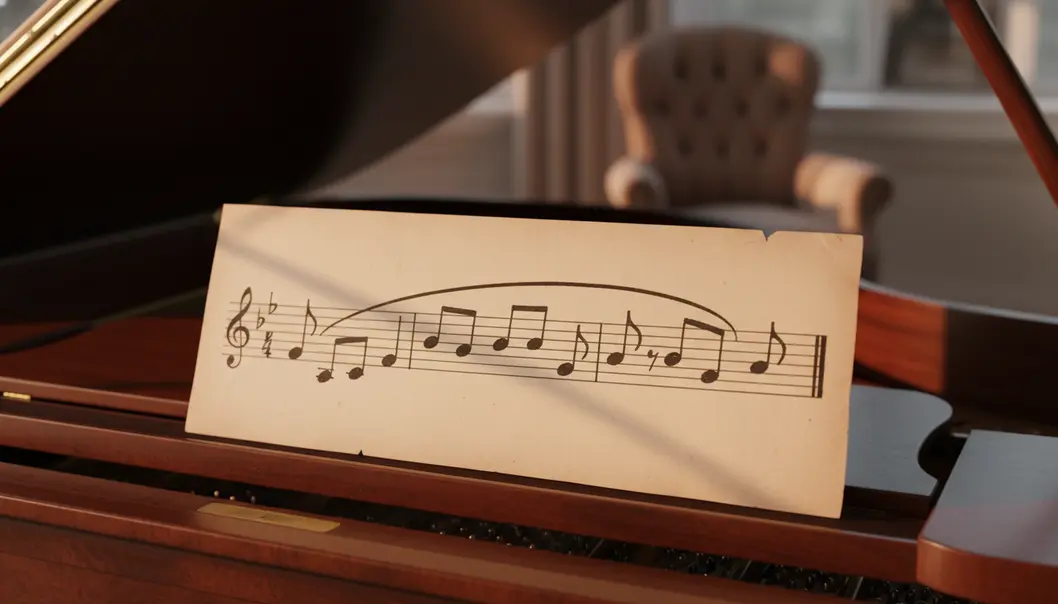
When you see a curved line placed over or under a group of notes—called a slur—that’s your cue to play legato. It tells the performer to treat those notes as a single, continuous thought or breath, much like how a singer sings a single word across multiple pitches.
It’s easy to mix up slurs and ties! A tie connects two notes of the same pitch, extending their duration. A slur connects notes of different pitches, telling you to play them smoothly using the legato technique.
Why is Legato So Important? 🎻
Think of music as a language. If you speak by pausing completely between every single word, it sounds robotic and hard to follow, isn’t it? Legato provides the syntax and flow, turning individual musical \”words\” into complete, expressive \”sentences.\”
It is particularly crucial for lyrical, slow-moving passages where emotional expression is key. I think mastering this articulation is what separates an amateur player from an expressive artist. It requires control, intent, and a deep sense of listening to the sound dying away from one note just as the next one is born.

How to Play Legato on Different Instruments 🎹
The concept is universal, but the physical execution varies dramatically depending on the instrument you are playing. Let’s break down how to achieve that silky smooth sound across different families of instruments.
| Instrument Family | Technique | Common Pitfalls |
|---|---|---|
| Piano | Keep the first key held down until the very moment the next finger strikes its key, creating a microscopic overlap. | Lifting the finger too early, causing a gap. |
| Strings (Violin/Cello) | Play multiple notes in a single, continuous bow stroke without changing bow direction. | Inconsistent bow pressure causing uneven tone. |
| Wind/Brass | Maintain a continuous stream of air while changing fingerings, not re-tonguing each note. | Stopping the airflow between note changes. |
| Voice | Singing smoothly from one vowel to the next on a single continuous breath. | Tensing the jaw or closing the throat. |
A very common mistake when trying to play legato is letting your hands, arms, or vocal cords tense up. True smoothness comes from relaxed, controlled movements. If you feel pain or stiffness, take a break!
Legato vs. Staccato: The Ultimate Contrast 🥊
To truly understand legato, it helps to look at its complete opposite: Staccato. While legato means \”tied together,\” staccato means \”detached.\” Staccato notes are short, bouncy, and have distinct silences between them.
Composers often place these two articulations side by side to create dramatic contrast. Imagine a flowing, lyrical melody suddenly punctuated by crisp, sharp chords. It’s this variety that brings music to life!
🔢 Legato Practice Routine Planner
Planning your practice time effectively is crucial. Enter your total available practice time in minutes below to get a balanced breakdown!
Warm-up & Scales: minutes
Focused Legato Exercises: minutes
Repertoire Integration: minutes

Practical Example: Mastering a Legato Phrase 📚
Let's look at a concrete example to see how this works in real life. Imagine you are working on a piece like Chopin's Nocturne in E-flat Major. The opening melody is famous for its gorgeous, flowing lines.
📝 Phrasing Walkthrough
- Step 1 (Analyze): Look for the long slur markings over the melody notes. This maps out your \"breath.\"
- Step 2 (Fingering): On piano, choose a fingering that allows you to walk smoothly from key to key without lifting your hand abruptly.
- Step 3 (Weight Transfer): Think of transferring the weight of your arm from one finger to the next, like walking carefully across a tightrope.
By breaking it down step-by-step, that impossible-sounding melody suddenly becomes an achievable, connected phrase. It takes patience, but the result is truly beautiful!
📝 Summary
Let's wrap up everything we've learned about this wonderful technique!
Legato Key Takeaways
FAQ ❓
I really hope this guide helps you unlock a new level of expressiveness in your playing. Just remember that beautiful phrasing takes time to develop, so be patient with yourself and enjoy the journey! If you have any more questions about your specific instrument or practice routines, feel free to ask in the comments! 😊