Have you ever stared deeply into the night sky just before it turns completely black? That mesmerizing, profound shade of midnight blue is exactly what comes to my mind when I think of indigo. 😊 Honestly, for a long time, I just thought of it as “dark blue” or “the color of my favorite jeans.” But there is so much more to this mysterious hue.
Indigo isn’t just a color; it’s a piece of human history. Let’s dive into the fascinating world of indigo together!
The Deep Roots: A History of the “King of Dyes” 👑
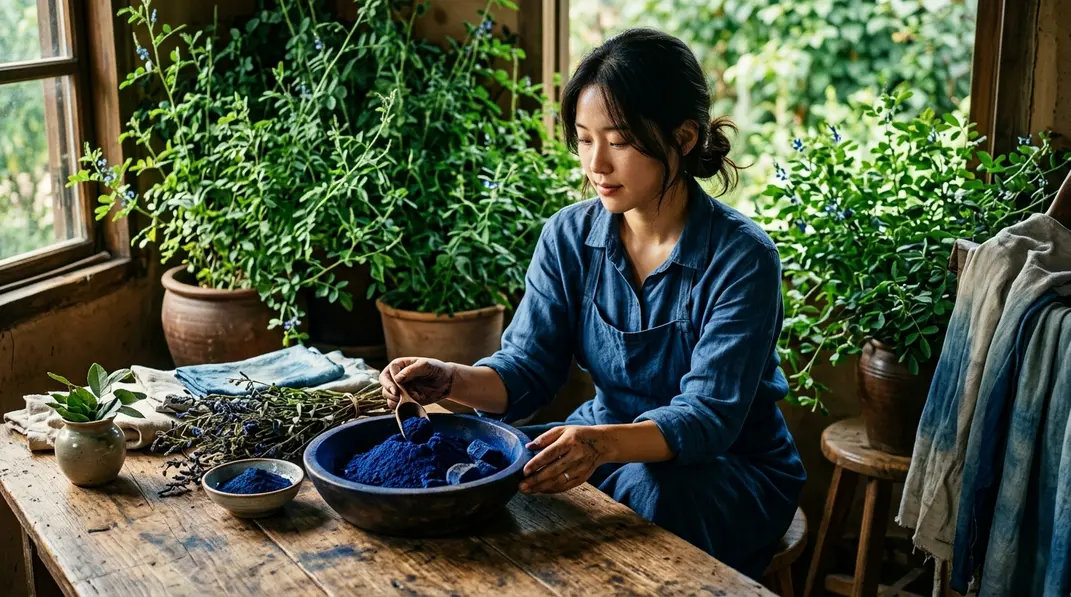
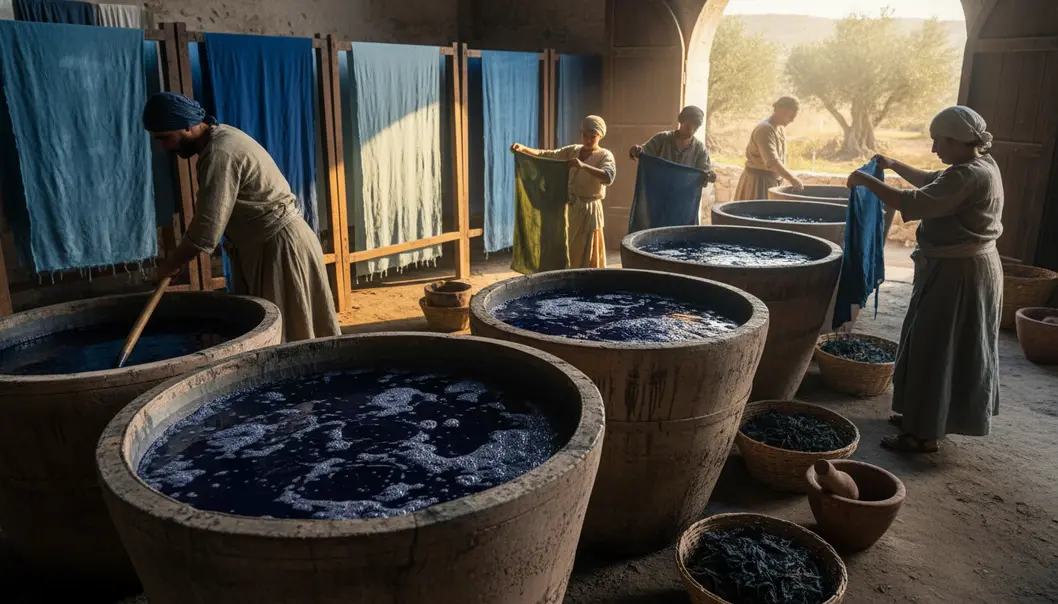
Long before synthetic dyes were invented, achieving a deep, long-lasting blue was incredibly difficult. That is, until humans discovered the magic of the Indigofera tinctoria plant. I remember being totally amazed when I learned that ancient civilizations in India, East Asia, and Egypt were extracting this pigment over 4,000 years ago!
The word “indigo” actually comes from the Greek word “indikon,” which simply translates to “from India.” It was considered so valuable that it was often referred to as “blue gold” along historical trading routes!
It’s crazy to think that a simple green leafy plant could produce such a rich, deep blue dye through a complex fermentation process. It was truly a chemical miracle of the ancient world.
The Psychology of Indigo 🧠
From a psychological standpoint, indigo is a color of deep intuition and perception. It sits right between the logic of blue and the spiritual mystery of violet in the color spectrum.
- Intuition and Perception: It encourages deep concentration during times of introspection and meditation.
- Wisdom: Often associated with inner wisdom and truth-seeking.
- Calmness: It can reduce stress and induce a sense of profound peace.
Whenever I feel overwhelmed, I find that simply surrounding myself with deep indigo tones helps ground my thoughts. It really is a powerful, grounding hue, isn’t it?

Natural vs. Synthetic Indigo 🌿🧪
Today, the indigo we see in most fast-fashion jeans isn’t the natural “blue gold” of the past. In 1897, synthetic indigo was introduced, changing the industry forever.
| Feature | Natural Indigo | Synthetic Indigo |
|---|---|---|
| Source | Indigofera plant leaves | Petrochemicals |
| Cost | Very High | Low (Mass production) |
| Environmental Impact | Biodegradable, sustainable | Can be toxic if untreated |
The synthetic indigo dyeing process uses harsh chemicals. When buying denim, looking for brands that use sustainable practices or natural dyes can make a huge environmental difference!
Using Indigo in Your Home Design 🏠
I am a huge fan of incorporating indigo into interior design. It acts as a fantastic “dark neutral” that pairs beautifully with warm woods, crisp whites, and even bright mustards.
🔢 Indigo Paint Calculator
Thinking of painting an accent wall indigo? Let’s figure out how much paint you need! (Assuming 1 gallon covers approx 400 sq ft).
Indigo in a Nutshell
Frequently Asked Questions ❓
To wrap up, indigo truly is a color with a soul. Whether you appreciate it for its rich historical roots, its psychological depth, or just how good it looks on a pair of jeans, it’s a color that will never go out of style.
What do you think of indigo? Do you have any indigo items in your home? Let me know in the comments! 😊