
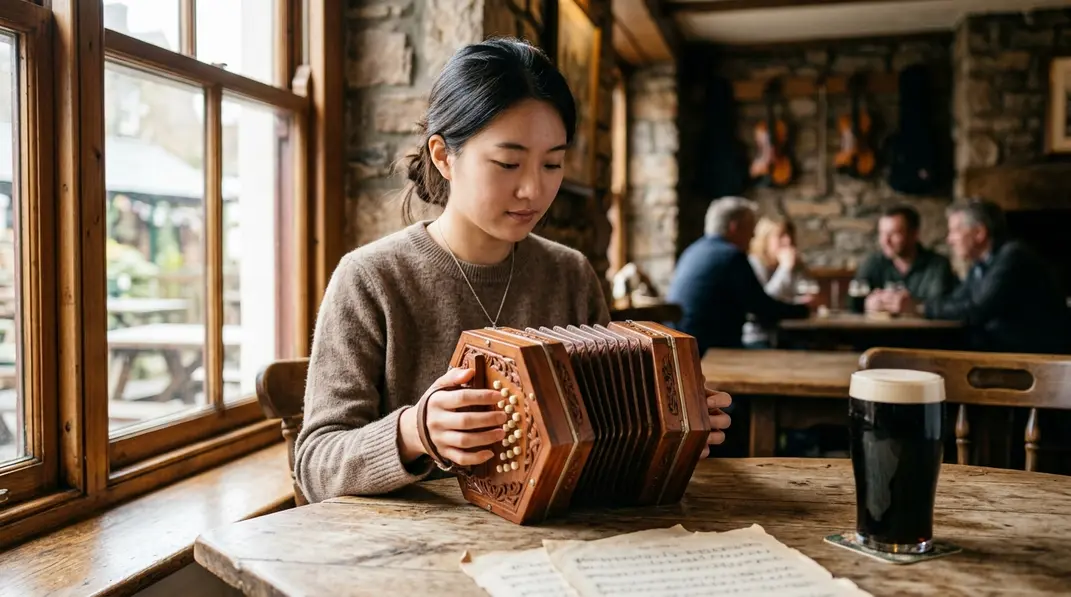
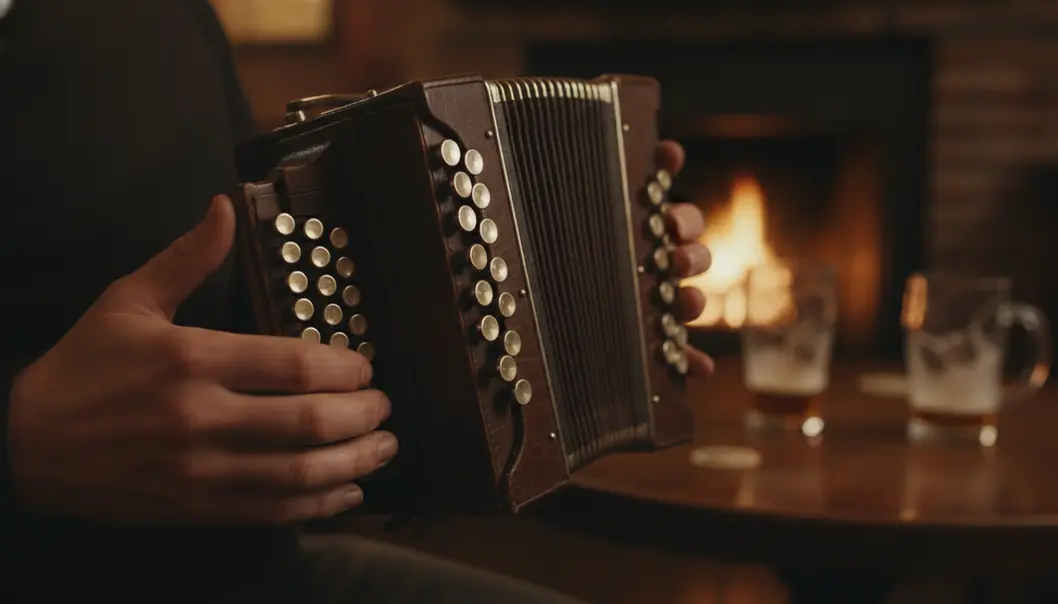
I still remember the first time I heard a concertina. I was at a cozy local pub, and a folk band was playing lively Irish tunes. There was this one musician holding a small, hexagonal instrument, pushing and pulling its bellows to create the most incredibly cheerful melodies. To be honest, I was completely captivated! 😊 I immediately went home and started researching, and that’s how my love affair with this unique instrument began. Whether you are a music enthusiast or a complete beginner looking for a fun new hobby, the concertina has a special kind of magic. Let’s explore what makes it so wonderful!
What Exactly is a Concertina? 🤔
At first glance, you might think it’s just a tiny accordion, but the concertina is entirely its own thing. Invented around 1829 by Sir Charles Wheatstone (yes, the same guy famous for the Wheatstone bridge in electronics!), it is a free-reed musical instrument. This means the sound is produced by air flowing past a vibrating piece of metal, called a reed, mounted in a frame.
Unlike an accordion, which typically has piano keys or chord buttons on one side, a concertina features small buttons on both ends. You hold it with both hands, using your thumbs and pinkies (or straps) to support the instrument, while your fingers dance across the buttons. You push and pull the bellows to pump air through the reeds.
The concertina became incredibly popular in the 19th century, particularly among sailors, the Salvation Army, and traditional folk musicians. Its small size made it the perfect, portable travel companion!
Anglo vs. English vs. Duet: What’s the Difference? 📊
If you are thinking about buying one, you’ll quickly realize there isn’t just one type of concertina. Broadly speaking, there are three main systems. It can be a bit confusing at first, but don’t worry, I’ll break it down simply for you!
| System Type | How It Works (Bellows Action) | Best For |
|---|---|---|
| Anglo | Bisonoric (Produces a different note on push and pull) | Irish traditional music, rhythmic dance tunes |
| English | Unisonoric (Produces the same note on push and pull) | Classical music, playing complex melodies smoothly |
| Duet | Unisonoric (Bass notes on the left, treble on the right) | Playing melody and chord accompaniment simultaneously |
Because the fingering systems are completely different, you cannot easily switch from an Anglo to an English concertina without totally relearning how to play. Choose your system carefully based on the music you want to play!

How Hard is it to Play? 🧮
I think one of the biggest questions people have is: \”Is it difficult to learn?\” Well, like any instrument, it takes practice. However, many beginners find the layout surprisingly intuitive, especially the Anglo system for simple folk melodies. Your brain quickly adapts to the rhythm of pushing and pulling!
To give you a better idea of how the Anglo concertina works, I’ve created a simple interactive tool below to demonstrate the \”bisonoric\” concept. This means one button gives you two different notes depending on your bellows direction. Try it out!
🔢 Bisonoric Action Simulator
Select a button row and an action (push or pull) to see how the note group changes on a standard C/G Anglo Concertina.
Practical Example: Buying Your First Concertina 📚
Buying your first squeezebox can feel overwhelming. Let me share a quick example to show you how a typical beginner makes their choice.
📝 Case Study: Sarah’s Folk Music Journey
Let’s say my friend Sarah wants to join a local Irish session band.
- Goal: Play fast-paced Irish jigs and reels.
- Budget: Around $400 – $600 for a reliable beginner model.
Her Decision Process:
- Since she wants to play traditional Irish music, she immediately rules out the English system and opts for a 30-button Anglo concertina.
- She makes sure to choose a C/G tuning, which is the absolute standard for Irish sessions.
- She purchases a reputable beginner hybrid model (which uses more affordable accordion reeds) to keep costs down while ensuring good build quality.
Concertina Key Takeaways
FAQ ❓
📝 Summary & Final Thoughts
We’ve covered a lot of ground today! Let’s quickly recap the main points:
- Choose your system wisely: Anglo for Irish/folk, English for classical/melodic, and Duet for solo accompaniment.
- Invest in quality: A decent starter instrument will save you a lot of frustration and make learning much more enjoyable.
- Have patience: Training your fingers and mastering the bellows takes time, but it is incredibly rewarding!
Honestly, picking up this instrument was one of the best musical decisions I’ve ever made. The lively sound simply brings joy to everyone in the room. Are you thinking about getting one, or do you already play? If you have any more questions, feel free to ask in the comments! 😊