


I still remember the first time I heard a concertina live. I was tucked away in a cozy, dimly lit pub in Ireland, and this musician pulled out what looked like a miniature, hexagonal accordion. The moment they started pulling and pushing the bellows, out came this incredibly bright, rhythmic, and soulful melody that instantly made everyone tap their feet. 😊 It was pure magic! To be honest, I was immediately hooked and wanted to know everything about this fascinating little instrument.
If you are reading this, chances are you’ve also fallen under the spell of the concertina, or maybe you are just curious about what makes it so different from an accordion. Is it hard to play? Which type should you buy? Don’t worry! Today, I am going to walk you through everything you need to know about this wonderful instrument. Let’s dive right in!
What Exactly is a Concertina? 🎶
At its core, a concertina is a free-reed musical instrument. Like its larger cousin, the accordion, it produces sound when air flows past vibrating metal reeds inside the instrument. The player creates this airflow by expanding and compressing the bellows situated between the two ends.
However, unlike a piano accordion that has a keyboard on one side and chord buttons on the other, the concertina features buttons (or keys) on both ends. The instrument is typically hexagonal or octagonal, making it incredibly compact and portable. You hold it by slipping your hands through leather straps, leaving your fingers free to dance across the buttons.
While “squeezebox” is a colloquial term for any bellows-driven instrument, the concertina is distinct from the accordion and the bandoneon. Accordions usually play chords on the left hand, while concertinas typically play individual notes on both hands, allowing for intricate melodies!
A Brief History: From Wheatstone to the World 🕰️
The history of the concertina is actually a tale of two inventors working simultaneously in different parts of Europe during the early 19th century. I think it’s quite fascinating how two distinct systems emerged almost at the same time!
In 1829, Sir Charles Wheatstone, an English scientist (who also invented the stereoscope and contributed to the telegraph), patented a version of the instrument in London. His design evolved into what we now call the English concertina. It was initially designed for playing classical music and parlor tunes, acting somewhat like a portable violin.
Meanwhile, around 1834 in Germany, Carl Friedrich Uhlig created a different layout, which eventually became known as the German concertina. This design was later modified in England to create the Anglo concertina, which became incredibly popular among folk musicians, sailors, and the working class due to its punchy sound and rhythmic capabilities.
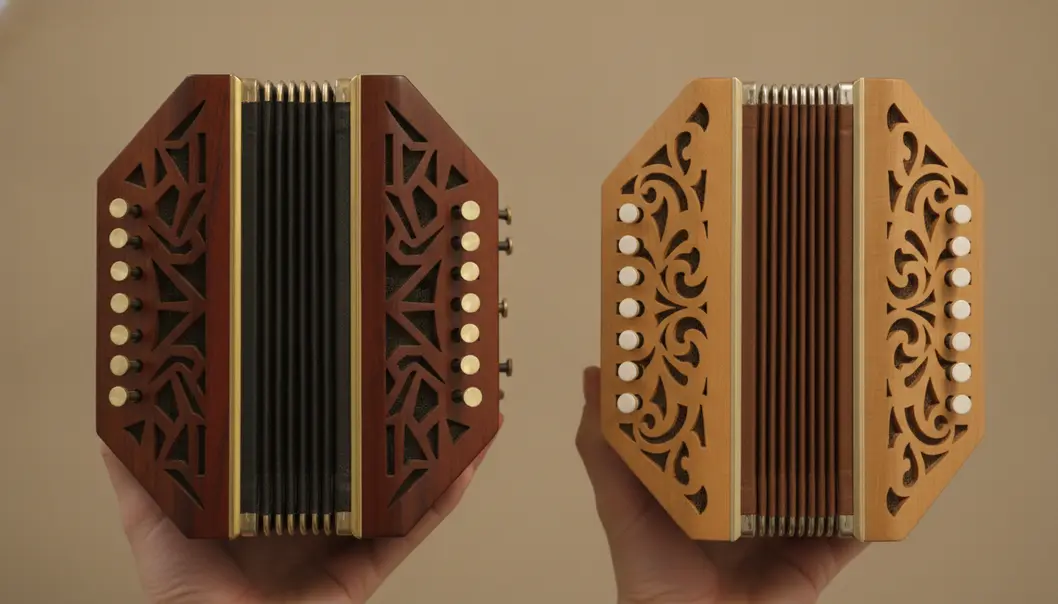
Anglo vs. English vs. Duet: What’s the Difference? 🤔
This is probably the most common question I get asked! If you want to start playing, you must choose a system, as they are completely different to play. It’s almost like choosing between a guitar and a bass—they look similar but function very differently.
| Type | Action (Bellows) | Best Suited For |
|---|---|---|
| Anglo | Bisonoric (different note on push and pull) | Irish traditional, folk, rhythmic dance music |
| English | Unisonoric (same note on push and pull) | Classical, song accompaniment, smooth melodies |
| Duet | Unisonoric (bass on left, treble on right) | Ragtime, complex arrangements, solo performances |
Let’s break that down a bit simply. The Anglo concertina acts like a harmonica. If you press a button and push the bellows in, you get one note. If you pull the bellows out while holding the same button, you get a completely different note! This push-pull action naturally gives the music a bouncy, rhythmic feel, making it the top choice for Irish traditional music.
On the other hand, the English concertina is unisonoric. Pressing a button gives you a ‘C’ whether you push or pull the bellows. The scale alternates between the left and right hands, which allows for incredibly fast, smooth, and flowing melodies. The Duet concertina is also unisonoric but has all the low notes on the left hand and high notes on the right, much like a piano.
When buying your first concertina, avoid extremely cheap “toy” models often found on mass e-commerce sites. They have stiff bellows, leaky air valves, and poor tuning, which will make learning terribly frustrating. Look for reputable beginner brands like Concertina Connection or specialized folk music shops.
How to Choose Your First Concertina 🛒
So, you’re ready to take the plunge? That’s awesome! Choosing your first instrument can be a bit overwhelming, but here is a simple guide to help you out.
- Pick your musical style: If you want to play Irish jigs and reels, go for a 30-button Anglo (usually tuned in C/G). If you want to play classical pieces or accompany your singing with full chords, an English or Duet might be better.
- Determine your budget: Concertinas are complex machines. A decent entry-level hybrid (using accordion reeds) costs between $400 and $600. Vintage or professional traditional reed concertinas can cost anywhere from $2,500 to over $6,000!
- Check the bellows: Good bellows should be flexible, airtight, and typically made of leather, with 6 to 9 folds.

Getting Started: Basic Playing Techniques 🎵
When your concertina finally arrives, the first thing you need to master is posture and how to hold it. Trust me, it feels a bit strange at first, but your hands will get used to it quickly!
📝 Example: Holding an Anglo Concertina
1. Slip your hands through the leather hand-straps. Adjust them so they are snug but not painfully tight.
2. Your thumbs sit outside the straps (sometimes resting on an air valve or thumb strap).
3. Rest the concertina on your knee (usually the right knee for Irish style) to support the weight and control the bellows movement.
4. Keep your fingers slightly curved, like you are holding a tennis ball, ready to press the buttons.
One crucial technique is air management. Because the Anglo is bisonoric, playing a long sequence of “push” notes will completely squash the bellows closed! You have to use the air valve (a special button usually operated by the right thumb) to silently let air in or out, repositioning the bellows.
🔢 Concertina Budget Planner
Curious about how much to save for your concertina journey? Let’s estimate your initial investment!
Concertina Guide Summary
FAQ ❓
There you have it! A whirlwind tour of the wonderful world of the concertina. Whether you are looking to jam at a local folk session or just want a beautifully portable instrument to play at home, the concertina is an incredibly rewarding choice. If you have any more questions about getting started, feel free to ask in the comments below! Keep squeezing and smiling! 😊