
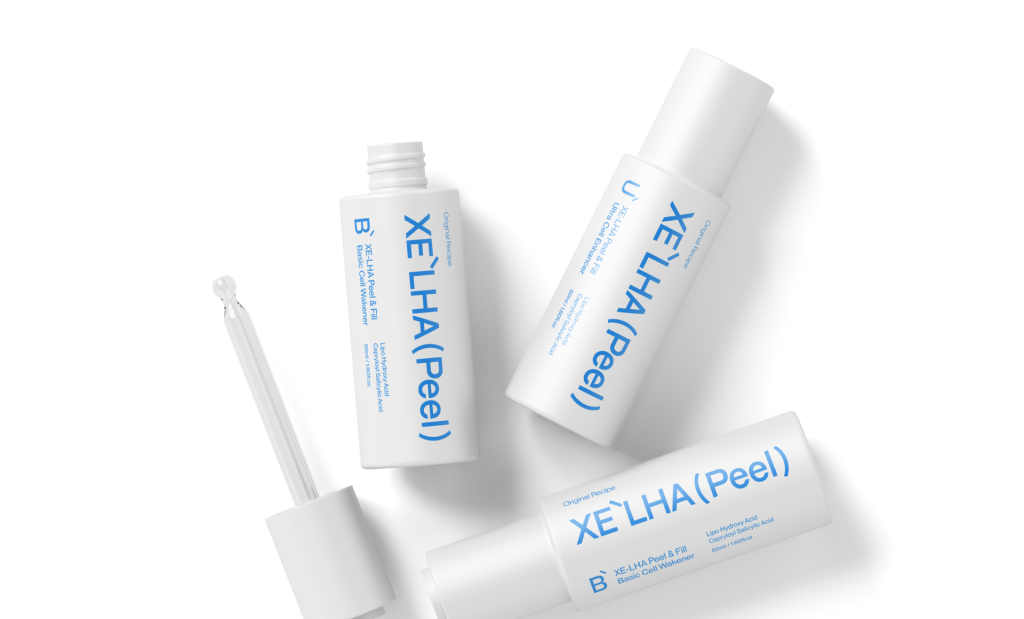
Lhala peel (also spelled Lala peel or LHA-LA peel) is a gentle peeling treatment that’s become a favorite in Korean dermatology clinics. It’s often compared with Aqua Peel, another popular, low-downtime option. Both are quick and easy to fit into a trip, but they’re designed for different skin concerns.
This guide explains what it is, how it differs from Aqua Peel, and how to plan it during your visit to Korea.
🧴What is Lhala peel?
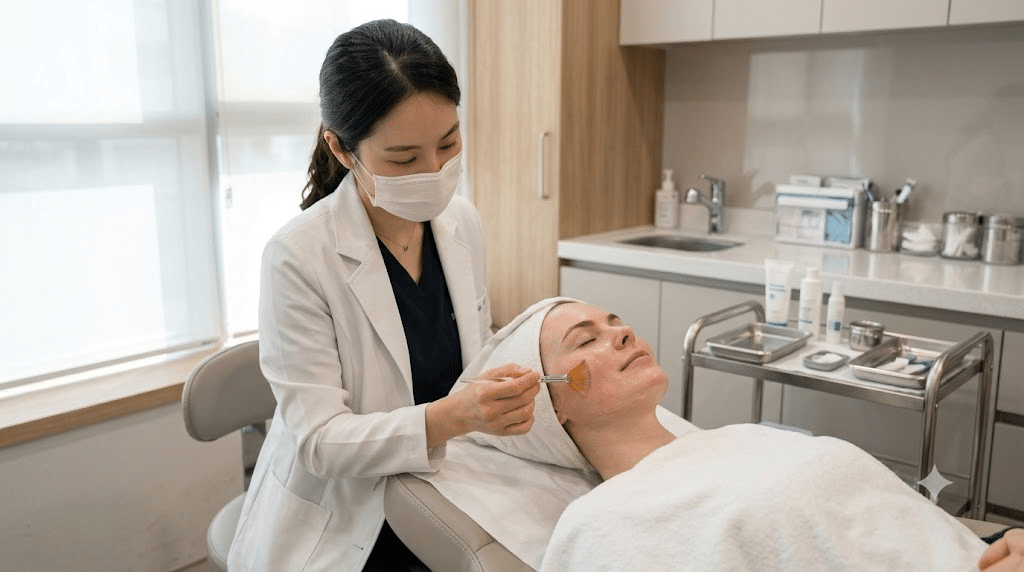
It’s a mild peel built around LHA (lipo-hydroxy acid), a gentle exfoliating ingredient. Unlike stronger acid peels, it works slowly on the outermost layer of skin, loosening dead skin cells and excess oil while helping keep the skin barrier comfortable.
In Korea, it’s often called a “4th-generation peel” because it focuses on low irritation and little to no downtime. After the peel loosens buildup on the surface, clinics usually follow with soothing or hydrating care, which is why many people choose it before an event or a night out.
At a glance:
- Time: About 20–30 minutes
- Numbing: Not needed
- Downtime: Little to none for most people
- Sessions: Often 3–5 sessions, 1–2 weeks apart
💧 What Is Aqua Peel?
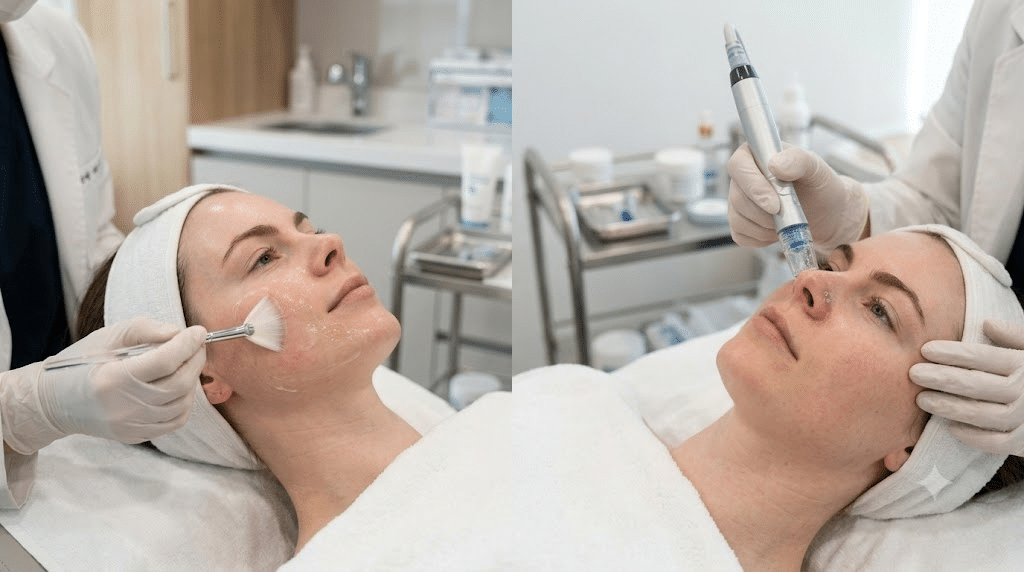
Aqua Peel is a water-based cleansing treatment. A handpiece uses water and gentle suction to clear pores, lift away sebum and impurities, and then infuse a hydrating solution. It’s one of the most common “first treatments” in Korea because it’s quick and very gentle.
⚖️ Lhala Peel vs Aqua Peel: 4 Key Differences
| Lhala Peel (Lala Peel) | Aqua Peel | |
|---|---|---|
| 1. Main focus | Dead skin buildup, dullness, rough texture | Pore cleansing, blackheads, excess oil |
| 2. How it works | Gentle LHA peel solution | Water jet + suction |
| 3. Good for | Dull, uneven, or rough skin; also sensitive skin | Oily or congested skin, clogged pores |
| 4. Feel & downtime | Slight tingling; little to no downtime | Very gentle; no downtime |
Which should you choose?
- Choose Lhala if your skin looks dull or feels rough, and you want a smoother, brighter-looking surface.
- Choose Aqua Peel if your main concern is clogged pores, blackheads, or oiliness.
- Many clinics in Korea also combine the two in one visit. Ask the doctor which order works best for your skin.
🙋 Who Is Lhala Peel For?
It’s commonly chosen by people who want to address:
- Dull or uneven-looking skin
- Rough texture and dead skin buildup
- Oiliness or occasional breakouts
- Skin that reacts easily to stronger peels
If you have active skin irritation, a recent sunburn, or are using prescription skincare, tell the doctor during consultation.
💰 Lhala Peel Price in Korea
In Seoul, it’s priced per session, and many clinics offer packages for 3 or 5 sessions.
| Price | |
|---|---|
| Lhala (1 session) | About ₩70,000–80,000 (~$52–59) |
| Aqua Peel (1 session) | About ₩20,000–60,000 (~$15–44) |
Prices vary by clinic and may change. Search “Lhala peel” in the YeoTi app to compare current prices and see which clinics offer English consultation.
✈️ Getting Lhala Peel During Your Korea Trip
- Fits any schedule. With little to no downtime, you can get it in the morning and go sightseeing in the afternoon.
- Good before a special day. Many visitors book it a day or two before photos, a wedding, or a night out.
- One session or more? On a short trip, one session works as a refresh. If you’re staying 2+ weeks, you can fit in two sessions about a week apart.
- English & payment: Many clinics in Gangnam and Myeongdong have English-speaking staff, and international cards are widely accepted. YeoTi shows the price upfront before you book.
🧊 Aftercare Tips
- Moisturize well for the next few days.
- Use SPF 50 sunscreen, especially when you’re outdoors.
- Avoid scrubs, exfoliating pads, and retinol for 2–3 days.
- Skip saunas and jjimjilbang on the day of treatment.
❓ FAQ
- Q1. What is Lhala peel?
- It’s a gentle peeling treatment based on LHA. It loosens dead skin cells and excess oil with little to no downtime.
- Q2. Is Lhala peel the same as Lala peel?
- Yes. “Lhala,” “Lala,” and “LHA-LA” are different spellings of the same treatment.
- Q3. Does it hurt?
- Most people feel only mild tingling. Numbing cream isn’t usually needed.
- Q4. Can I get both peels together?
- Yes. Many Korean clinics combine them in one visit. The doctor will recommend the order and whether it suits your skin.
👉 [Check out YeoTi’s Fall coupon deals and book now!]

Want to explore trusted Korean clinics?
Check out YeoTi — the all-in-one Korean aesthetic app
- Over 1,720,000 verified treatment reviews
- Transparent local pricing for foreigners
- Consultation and booking available in English, Japanese and Chinese
REAL REVIEWS FROM CUSTOMERS
Curious about treatment reviews or pricing? Click here to find out more.





[…] Aqua Peel: a gentle, water-based cleansing treatment with no downtime. See Lhala Peel vs Aqua Peel. […]