

Have you ever looked in the mirror and wished you could tweak just one tiny detail about your nose, but the thought of going under the knife makes you instantly back away? Trust me, I completely understand that feeling. For years, I stared at a slight bump on my bridge, wondering if there was a magic wand to smooth it out without months of painful recovery. Well, it turns out, there is something quite close to magic, and it’s called a nose filler. 😊
What Exactly is a Nose Filler? 🤔
Often referred to as “liquid rhinoplasty” or “non-surgical rhinoplasty,” a nose filler is an aesthetic procedure where a medical professional injects a dermal filler—usually hyaluronic acid (HA)—underneath your skin to temporarily change the structure of your nose. It’s truly fascinating! Instead of removing bone or cartilage, the injector strategically adds volume to smooth out bumps, lift the tip, or create a much more symmetrical appearance.
To be honest, the absolute best part is the immediacy of the results. You walk into the clinic, and less than an hour later, you walk out with a visibly different profile. However, it is crucial to remember that fillers do not make your nose physically smaller. They only create the beautiful optical illusion of a straighter, more refined shape by blending the surrounding contours.
Hyaluronic acid fillers used in the nose are entirely reversible! If you are ever unhappy with the outcome, a special enzyme called hyaluronidase can be injected to dissolve the filler safely.
Surgical vs. Non-Surgical Rhinoplasty 📊
You might naturally be wondering, “Should I just get a real nose job instead?” It’s a highly personal decision. To help you weigh your options realistically, let’s look at a clear comparison between the two approaches.
| Feature | Nose Filler (Liquid) | Surgical Rhinoplasty |
|---|---|---|
| Procedure Time | 15 – 30 minutes | 1 – 3 hours |
| Downtime | Minimal to none (mild swelling) | 1 – 2 weeks minimum |
| Longevity | Temporary (6 – 18 months) | Permanent |
| Cost (Average) | $600 – $1,500 per session | $5,000 – $15,000+ |
The Liquid Rhinoplasty Procedure 👩⚕️
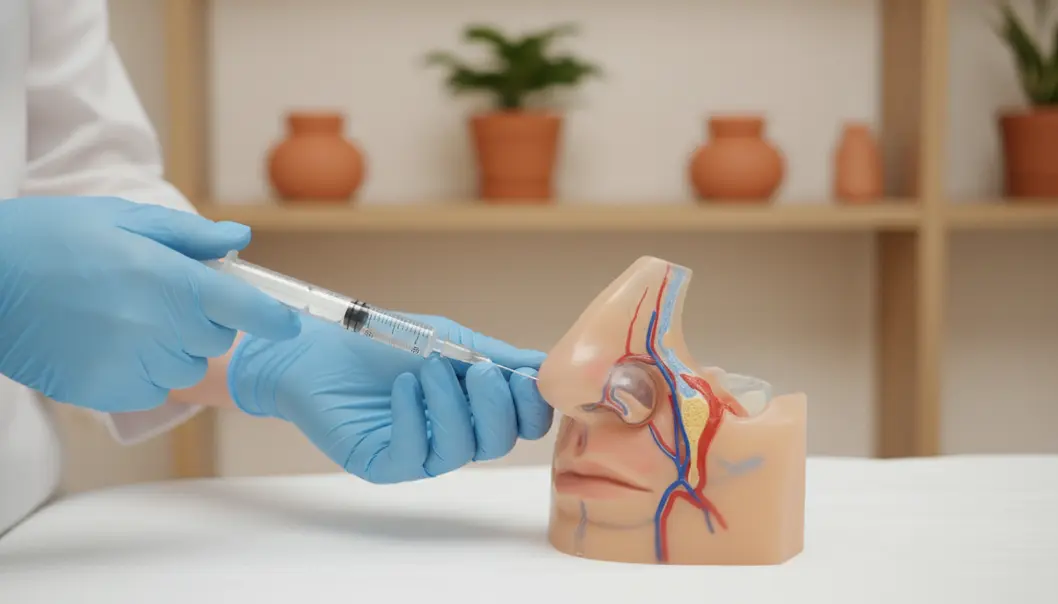
If you have decided to take the plunge, it’s completely normal to feel a few butterflies in your stomach. Knowing exactly what happens during the appointment can really put your mind at ease. The process is incredibly straightforward and quite fascinating to experience.
- Consultation: The doctor will examine your nose from multiple angles, discuss your aesthetic goals, and determine if filler can realistically achieve them.
- Numbing: A topical numbing cream or local anesthesia is applied to the nose to make the procedure as painless and comfortable as possible.
- Injection: Using a very fine needle or a blunt-tipped cannula, the doctor precisely injects small amounts of filler into the target areas (like the bridge or the tip).
- Molding: The injector will gently massage and mold the filler with their fingers to ensure a perfectly smooth and natural contour.
🔢 Filler Longevity Estimator
Curious how long your beautiful results might last? Your body’s metabolism actually plays a huge role!
Real-Life Case: Smoothing the Dorsal Hump 📚
Let’s look at a very practical example. Imagine someone dealing with a noticeable dorsal hump (that bump on the bridge of the nose). It’s one of the most common reasons people seek this specific treatment.
📝 Example: Sarah’s Profile Transformation
The Goal: Sarah had a straight nose from the front, but a distinct bump was visible from the side. She desperately wanted a smoother profile for her upcoming wedding photos.
The Technique: Instead of surgically filing the bone down, her doctor carefully injected HA filler directly above and below the bump.
The Result: The filler essentially filled in the “valleys” around the bump. Her nose suddenly appeared perfectly straight from the side! Even though her nose technically had more volume added to it overall, the smooth, uninterrupted line made it look elegantly proportionate and refined.

Safety First: Risks and Essential Aftercare ⚠️
While this procedure is quick and doesn’t require going under general anesthesia, it is absolutely not without its risks. The nose has an incredibly complex blood supply network. I cannot stress this point enough: you must go to a highly qualified, board-certified medical professional. Please, do not look for a bargain when it comes to your face!
The most severe risk of a nose filler is vascular occlusion. This occurs when filler accidentally enters a blood vessel and blocks the vital blood flow. It can lead to skin necrosis (tissue death) or, in extremely rare cases, blindness. A properly trained, skilled injector knows the anatomy deeply and takes strict precautions to avoid this.
After your treatment, sticking to the aftercare rules is crucial for keeping those beautiful results. You should avoid wearing heavy glasses or sunglasses for at least a week or two, as the weight on the bridge can actually dent or shift the filler while it is still settling into the tissue. Additionally, try to avoid strenuous exercise, heavy sweating, saunas, and facials for the first 24 to 48 hours to minimize any swelling and bruising.
📝 Summary Card
Nose Filler Recap
FAQ ❓
If you’re looking for a temporary, non-surgical way to boost your confidence and refine your profile, a nose filler could be a fantastic option. Just remember to do your research and prioritize your safety above all else. If you have any more questions about the procedure or want to share your own experiences, feel free to drop them in the comments below! 😊