

I remember standing by a calm lake as a kid, tossing smooth rocks into the water and watching them sink in the blink of an eye. A few minutes later, a huge, chunky wooden log drifted by, floating perfectly on the surface. I was totally confused! Isn’t a giant piece of wood much heavier than a little rock? Why on earth did the heavy log float while my tiny rock sank? It was only later in science class that I learned the secret: it’s not just about how much something weighs, but rather how tightly packed that weight is. That, my friends, is the magic of density in a nutshell! 😊
Today, we are going to explore this essential scientific concept. Whether you are a student trying to ace your physics test, a curious parent fielding questions from inquisitive kids, or just someone who loves understanding how the world works, this guide is for you. We will break down density so it is incredibly easy to grasp, using real-world examples that you see every single day.
What Exactly is Density? 🤔
To put it simply, density is the measure of how much \”stuff\” (mass) is packed into a certain amount of space (volume). Think of a crowded elevator. If you have two identical elevators and one has two people in it while the other has twenty, the elevator with twenty people is much more \”dense.\” The space (volume) is the same, but the amount of stuff inside (mass) is completely different.
In scientific terms, mass is how much matter an object contains, usually measured in grams (g) or kilograms (kg). Volume is how much three-dimensional space that object occupies, typically measured in cubic centimeters (cm³) or milliliters (mL). When you divide the mass of an object by its volume, you get its density. This means that two objects can be the exact same size, but if one is made of a heavier material, it will be denser.
The density of pure liquid water is exactly 1 gram per cubic centimeter (1 g/cm³). This is an incredibly helpful baseline! If an object has a density greater than 1, it will sink in water. If it has a density less than 1, it will proudly float on top.
The Classic Ice Cube Mystery 🧊
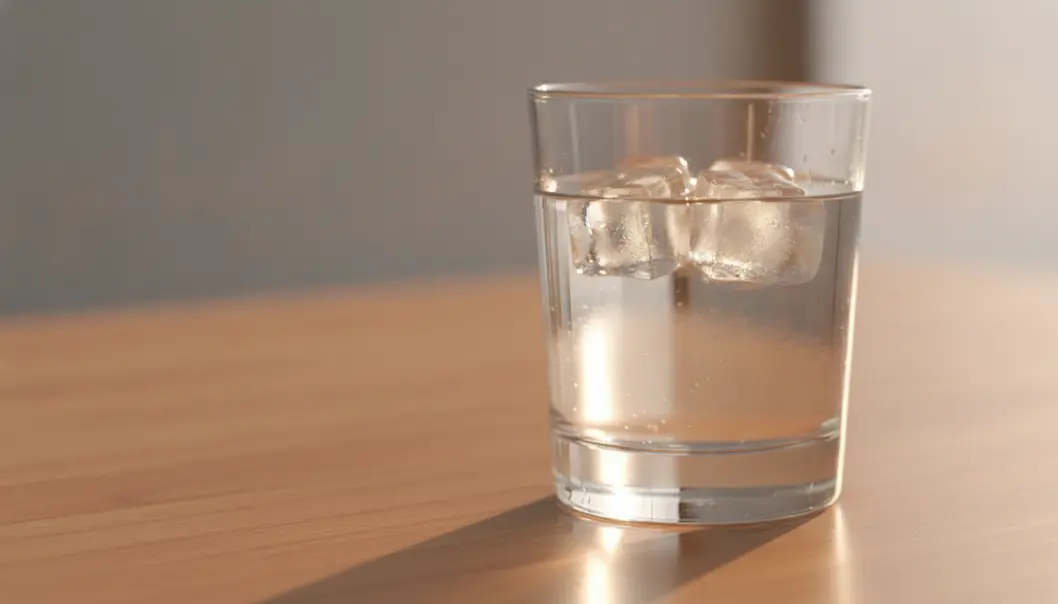
Let’s look at one of the most amazing everyday examples of density: the ice cube in your drink. When most liquids freeze and turn into solids, their molecules pack closer together, making them denser. But water is incredibly unique! When water freezes into ice, its molecules form a crystal structure that actually pushes them further apart.
Because the molecules are spread out, ice is about 9% less dense than liquid water. That is precisely why ice cubes float at the top of your lemonade! If water behaved like most other substances, lakes and oceans would freeze from the bottom up in winter, which would be disastrous for marine life. Nature’s little density trick literally keeps fish alive!
It is a common mistake to think \”heavy things sink and light things float.\” A massive aircraft carrier weighs thousands of tons but floats because its overall density (including all the empty air inside its hull) is less than water. Meanwhile, a tiny grain of sand weighs almost nothing, but it sinks because its density is higher than water.

Factors That Influence Density 🌡️
Density isn’t always a fixed number; it can change based on environmental factors, most notably temperature and pressure. When you heat an object up, its molecules get excited and start moving around more quickly. This movement causes the substance to expand, taking up more volume. Because the mass stays the same but the volume increases, the density actually decreases!
This is exactly how hot air balloons work. By heating the air inside the giant balloon, the air expands and becomes less dense than the cooler air surrounding it on the outside. This difference creates a buoyant force that lifts the heavy basket and its passengers right off the ground. It is totally amazing to think that just by altering density, humans figured out how to fly!
Comparative Densities of Common Materials
To give you a better sense of how different materials stack up, I’ve put together a handy table of common substances and their average densities at room temperature.
| Material | Density (g/cm³) | Float or Sink in Water? |
|---|---|---|
| Balsa Wood | 0.16 | Floats easily |
| Ice | 0.92 | Floats |
| Pure Water | 1.00 | Neutral (Baseline) |
| Aluminum | 2.70 | Sinks |
| Iron | 7.87 | Sinks |
| Gold | 19.32 | Sinks heavily |
How to Calculate Density 🧮
Calculating density is a straightforward process once you know the mass and volume. The universal formula is:
Let’s try it out! I have built a simple interactive calculator for you below. Just enter the mass of your mystery object in grams, and its volume in cubic centimeters, and see what happens!
🔢 Interactive Density Calculator
Practical Example: Archimedes and the Golden Crown 👑
You can’t talk about density without telling the legendary story of Archimedes. Back in ancient Greece, King Hiero II had a brand new crown made, supposedly of pure gold. However, the king suspected the goldsmith might have stolen some gold and replaced it with cheaper silver. He asked the brilliant mathematician Archimedes to find out, but with one strict rule: he couldn’t melt or damage the crown.
📝 How Archimedes Solved It
- The Problem: The crown was an irregular shape, so calculating its volume with standard math was impossible at the time.
- The \”Eureka!\” Moment: While stepping into a full public bath, Archimedes noticed water spilling over the edges. He realized that the volume of the displaced water was exactly equal to the volume of his submerged body!
- The Test: He took the crown and a lump of pure gold that weighed exactly the same as the crown. He dunked them both into separate, brim-filled bowls of water.
- The Conclusion: The crown displaced more water than the pure gold lump. This meant the crown had a larger volume. Since the masses were equal, a larger volume meant a lower density. The goldsmith was busted! He had mixed in lighter, less dense silver.
It’s amazing, isn’t it? A simple observation in a bathtub led to one of the most foundational principles of physics. Density isn’t just an abstract concept; it is a highly practical tool used for testing purity, designing ships, creating aircraft, and even understanding weather patterns!
📝 Summary & Key Takeaways
We have covered a lot of ground today! From ice cubes in your lemonade to ancient Greek bathtubs, density is truly everywhere. Let’s recap the most important things we learned.
- Density is Mass ÷ Volume: It is the measure of how tightly packed the matter in an object is.
- Water is the Benchmark: Pure water has a density of 1 g/cm³. Objects with a density below 1 will float, and those above 1 will sink.
- Temperature Matters: Heating an object generally makes it expand, lowering its density (think hot air balloons!).
- Shape Changes Everything: Heavy materials like steel can float if they are shaped to contain a lot of air, lowering their overall density.
Density at a Glance
FAQ ❓
I hope this deep dive into density helped clear things up for you! The physical world is full of these amazing hidden rules, and once you understand them, everyday magic like floating ships and flying balloons make perfect sense. If you have any more questions about density, or if you just want to share a fun science experiment you tried at home, please feel free to leave a comment below! I’d love to hear from you. 😊